
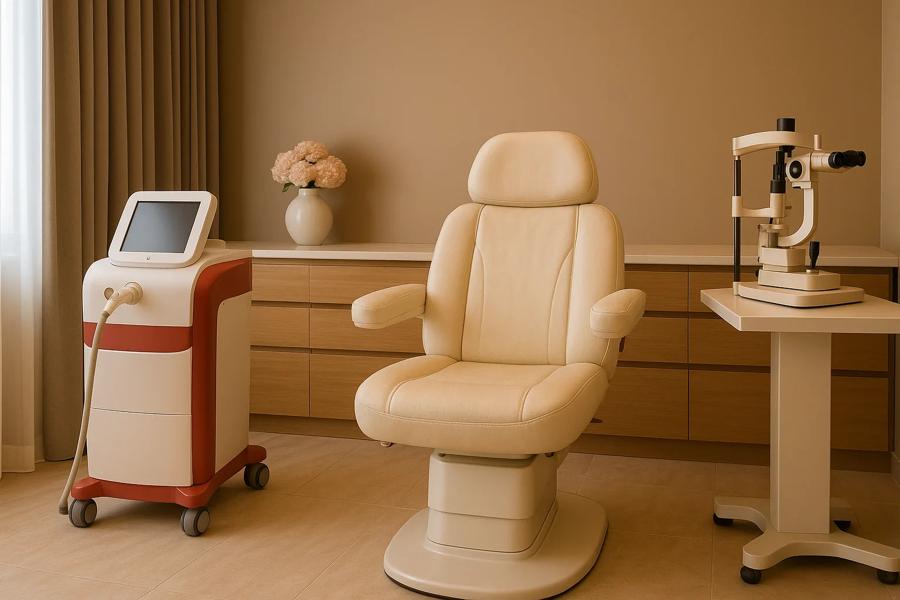
Dry eye is the single highest-leverage service most optometry practices are leaving on the table.
You already have the patients. You already have the chairs, the chief complaints, and the clinical credibility. What's usually missing is a system, a clear protocol, the right language, and the confidence to treat dry eye as a program instead of a five-minute add-on at the end of a routine exam.
Here's exactly how I help practices add dry eye the right way.
Why Dry Eye Is the Easiest High-Value Service to Add
Dry eye disease is chronic, progressive, and incredibly common, and most of the patients who have it are already sitting in your exam chair complaining about it. They're rubbing their eyes, blaming their screens, and buying drops that don't work.
Unlike aesthetics or surgical co-management, dry eye doesn't require a new patient base. It requires you to actually treat a condition you're already diagnosing in passing. That's why it's the fastest service to stand up: the demand is already in your schedule.
Start With Diagnosis, Not Devices
The most common mistake I see is a practice buying a $90,000 device first and then trying to find patients to justify it. Do it in the opposite order.
Begin by building a real diagnostic workup:
- A dry eye questionnaire (SPEED or OSDI) handed to every patient at check-in.
- Objective testing, meibography, tear osmolarity, MMP-9, tear breakup time.
- A documented severity grade so you can show the patient where they are and track progress.
When you measure, you can show. When you can show, patients buy in. Diagnosis is what converts a vague complaint into a treatment plan.
Build a Repeatable Dry Eye Protocol
A service only scales when it's repeatable. Map out your tiers before you treat a single patient:
- Tier 1, Foundational: education, lid hygiene, omega-3s, warm compress, prescription drops.
- Tier 2, In-office procedures: meibomian gland expression, thermal treatment, amniotic membranes.
- Tier 3, Advanced therapy: IPL, radiofrequency, or low-level light therapy for chronic MGD.
Every patient enters at the tier their diagnosis supports, and there's always a clear next step.
Price It as a Program, Not a Visit
This is the shift that changes your economics. Dry eye is chronic, so the care is ongoing, and your pricing should reflect that. Build packages: a four-session IPL series, a quarterly maintenance plan, an annual membership that bundles testing and treatment.
Patients understand chronic care. Nobody expects to manage diabetes in one visit. Frame dry eye the same way and your average revenue per patient changes completely.
Train Your Team to Talk About It
Your front desk and techs spend more time with patients than you do. If they can't explain what dry eye is and why the evaluation matters, your conversion stalls before the patient reaches your chair.
Give your team simple, repeatable language. Teach them to hand out the questionnaire, to mention the dedicated evaluation, and to normalize treatment as routine chronic care, not an upsell.
Market to the Patients Already in Your Chairs
You don't need a marketing agency to launch dry eye. You need to mine the demand you already have. Flag every chart with a dry eye symptom, every contact lens dropout, every patient who's tried three different drops. Recall them specifically for a dedicated dry eye evaluation.
The patients who say "I've just learned to live with it" are your warmest leads. They've already told you they have the problem.
What to Expect in the First 90 Days
In the first month, you'll be diagnosing and grading. In the second, you'll be converting your existing complainers into Tier 1 and Tier 2 plans. By the third, you'll have enough volume to justify, and fill, an advanced device.
Done in that order, dry eye becomes profitable before you ever take on debt. And more importantly, you start actually solving a problem your patients have been quietly suffering with for years.
That's the kind of service that builds a practice, clinically meaningful, genuinely wanted, and built to last.